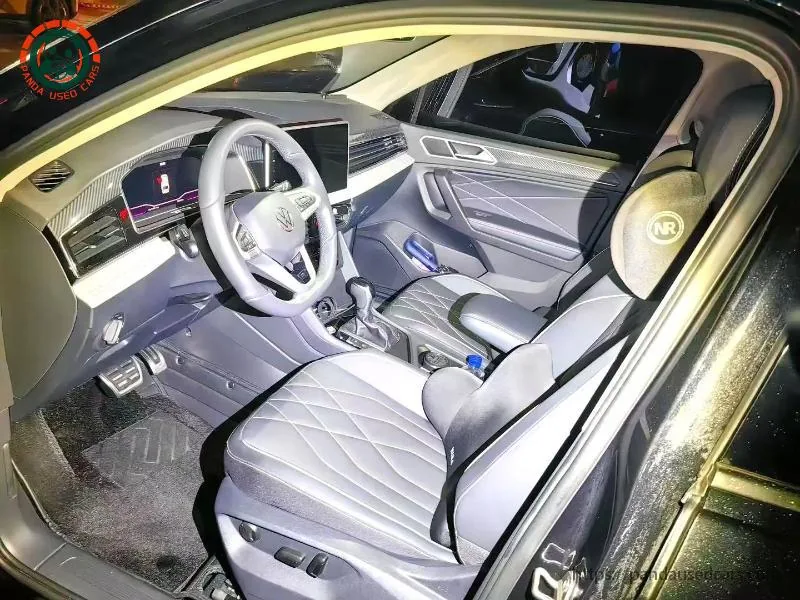
Describe the installed package at function and component level
Request the original-market equipment record tied to the VIN, then compare it with current installed items. Use the specification guide rather than one universal trim table. Record engine, drive system, wheels, seating, lighting, assistance and chassis options independently. A badge or body-kit photograph is not proof of every advertised function, and R-Line should not be used as evidence that a separately named performance model’s hardware is fitted. Ask about removed or later-installed components and keep those changes visible. The premium needs a clear delivered list, not the best combination of sporty features found across several years, regions and related models.
Trial ordinary comfort instead of assuming sport styling is an upgrade
List the buyer’s usual roads, passengers, parking and journeys. Trial seating, access, visibility and permitted road behaviour on the actual candidate and alternative. The family-use file ensures styling preference does not silently reduce practical fit. Firmer-feeling or differently equipped cars can suit different drivers without a universal comfort winner. Do not request high-speed manoeuvres to prove a trim claim. Mark the features the buyer will use frequently and those valued mainly for appearance. A legitimate preference can justify spending, but it should not be presented as an essential improvement when the ordinary task is already met more naturally by another supported package.
Verify chassis options and wheel fitment separately
Use the DCC and suspension file to identify actual equipment and relevant qualified findings. An R-Line name or selectable mode does not prove every component or supported adjustment is present. Review the wheel and brake arrangement for exact specification, condition, wear and compatible replacement support. Do not price unusual vibration or uneven wear as a simple balancing item before the cause is understood. Larger-looking wheels are not automatically more useful for the buyer’s road environment or operating budget. The complete chassis arrangement needs an evidence and support route, not just an attractive exterior that obscures actual options and preparation.
Check essential assistance, lighting and phone functions directly
Use the software and ADAS guide and calibration checks to retain actual hardware and relevant repair context. A feature being originally available is different from its current function and destination-supported use. Trial essential phone and account requirements through the connectivity handover file. Do not credit unofficial installations, borrowed logins or promised future updates as confirmed factory-equivalent extras. Keep system limits visible rather than equate the most expensive package with guaranteed safe operation. An essential unsupported feature should not justify a premium simply because a display, lamp or trim badge looks impressive in the supplier’s photograph.
Inspect condition and paid support apart from option quantity
Arrange suitable whole-vehicle inspection for the actual propulsion, structure, chassis and electronics. More equipment is not proof of unreliability, and a lower option count does not certify a used car is healthy. Ask receiving providers about correct components, diagnostics and setup through the VIN fitment guide. Confirm provider coverage separately from paid repair capability. Preserve access limits and investigate meaningful unresolved findings rather than call them small trim-related expenses automatically. A desirable factory package can remain poor value if an essential installation, repair or service-route question is not established for the original-market candidate being offered.
Pay for a useful complete package with clear preferences
Normalise inspection, essential work, supplied items and delivered readiness using the price guide. Separate propulsion and production differences from cosmetic or convenience equipment so the full gap is not attributed to R-Line. Use the ownership worksheet without guaranteed option resale or an assumed sporty-trim depreciation percentage. Approve the actual package when useful functions, accepted preferences and support justify the amount; choose the adequate alternative when they do not. List included and excluded items in the contract schedule. A substitute with the same badge needs its own review rather than approval from a designation whose regional meaning may differ.
Compare the acceptance conditions
- Premium buys useful value
- Actual frequently used equipment and accepted preferences have suitable condition, component support and an understandable complete price difference.
- Verify the advertised package
- Badge, mode menu or borrowed regional list is standing in for actual chassis, function or installation evidence.
- Lower package is adequate
- Essential use is already met and the extra amount mainly buys appearance, rarely used features or unsupported promises.
Buyer evidence checklist
- Actual original and installed equipment list
- Practical road/cabin trial on both cars
- Chassis options and wheel identity separately verified
- Essential functions and applicable calibration context
- Full premium, parts support and delivered-item schedule
Questions before you buy
Does R-Line prove DCC or performance-model hardware is fitted?
No. Establish actual installed components and original-market configuration; a package name is not proof of every option or another model’s hardware.
Must a sport-styled package be more comfortable or better value?
No universal conclusion applies. Trial ordinary use and compare useful equipment, present condition, support and complete cost.
Primary and regional references
Each reference describes its own market or commercial scope; it does not identify the offered VIN or prove its condition or availability.
Volkswagen European Tiguan launch: named equipment versions ↗