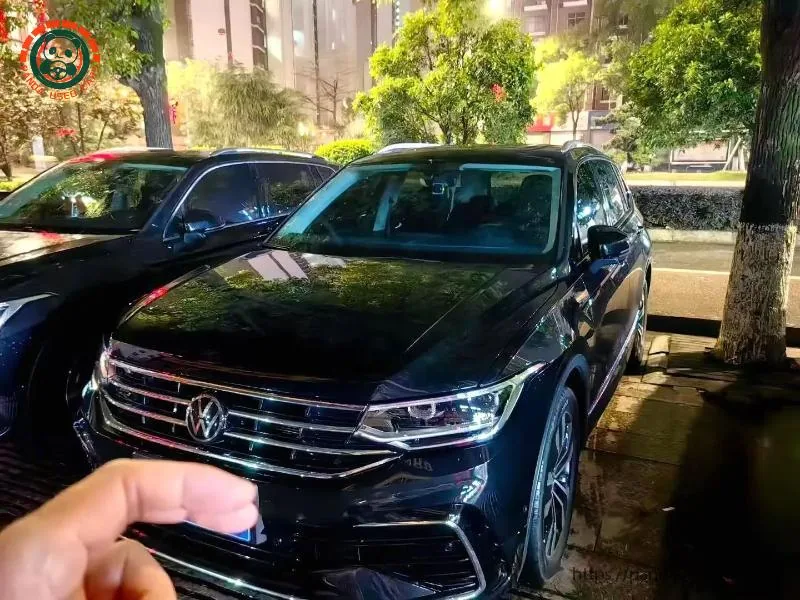
Start with the correct cooling-system identity
Tiguan generations and engines do not all use the same components or plumbing. Record the engine code and the installed equipment before requesting parts prices. A workshop should select its inspection procedure from information applicable to the VIN. Use the engine and drivetrain guide to keep the candidate's identity clear, especially when a listing mixes Tiguan and Tiguan L specifications. Do not assume that a photograph of a pump sold online identifies the fitted part or establishes its condition.
Preserve the first cold-condition observations
Ask for dated photographs and the inspector's observations before topping up or cleaning the area. Record whether the vehicle had cooled, the level relative to the marked range and any visible residue. Ask about recent coolant additions, warnings and repair invoices. Colour alone is not a reliable specification check, and mixing an unidentified product can complicate the problem. The purpose of this stage is to preserve evidence for the technician, not to direct an unqualified seller to open, drain or pressurise the system.
Let the workshop trace the source
A qualified inspection may include a manufacturer-appropriate pressure test and checks around accessible joints, housings, hoses, radiator and pump area. Leakage can run along components, so staining beneath a housing does not conclusively identify the source. Request the test conditions, observed result and any inaccessible areas. If no external cause is found, ask what additional diagnosis is justified by the symptoms. Avoid turning a suspected component into a confirmed replacement merely because it is often mentioned in owner discussions.
Treat overheating history as a separate question
A leak repaired before overheating is a different proposition from a car driven repeatedly with a temperature warning. Ask the seller for the sequence of events: warning, distance driven, recovery, diagnosis and repair. A clear dashboard today does not reconstruct that history. The history and mileage file can connect dated invoices and recorded distances, but missing records remain missing. If overheating is credible, have the workshop assess possible consequences before accepting a simple top-up or component invoice as closure.
Verify the repair beyond the invoice
An invoice should identify the vehicle, replaced parts and work performed. The subsequent check should address leakage, correct fluid and relevant operating behaviour according to the workshop procedure. A pressure-test pass is evidence for the conditions tested, not a lifetime warranty. Ask whether fault codes or abnormal heating symptoms remain and whether another check is recommended after use. Keep the pre-repair and post-repair records together so a destination workshop does not have to infer why a part was changed from a box of discarded components.
Set a clear purchase and shipping decision
Do not load a car with an unresolved significant coolant leak simply because the journey starts soon. Agree whether the vehicle will be repaired and retested, held for diagnosis or rejected. A car that cannot be operated safely also needs a transport plan appropriate to its condition. Add justified work and delay costs to the landed-cost estimate, separately from routine maintenance. If the diagnosis is still uncertain, use an explicit unresolved item rather than an optimistic fixed repair budget.
Example: residue after a recent housing repair
A candidate has dried residue near the cooling assembly and an invoice from the previous week. That combination may reflect an old leak, but it is not enough to decide whether leakage continues. Ask the workshop to document the current condition and the appropriate retest, without erasing the original evidence. If the result supports a completed repair, retain both records. If fresh loss appears, reopen the diagnosis instead of treating the invoice date as the end of the issue.
Buyer checklist
- Document initial condition before cleaning or topping up.
- Match diagnosis and parts to the engine and VIN.
- Ask explicitly about previous temperature warnings.
- Require an appropriate post-repair check before acceptance.
Questions and answers
Does coolant loss always mean a failed water pump?
No. Several external or internal causes are possible. A technician must trace the fault on the actual vehicle.
Can the seller add coolant and send the car?
A top-up is not an explanation. Material unexplained loss should be diagnosed and the vehicle made suitable for operation and transport before release.
Reference information
Use the applicable market and year documentation for equipment and operating limits. The references have their own market and publication scope; they do not establish the condition, fitted equipment or destination approval of an individual vehicle.
Continue with the Tiguan maintenance and parts planning, or send your vehicle requirements.