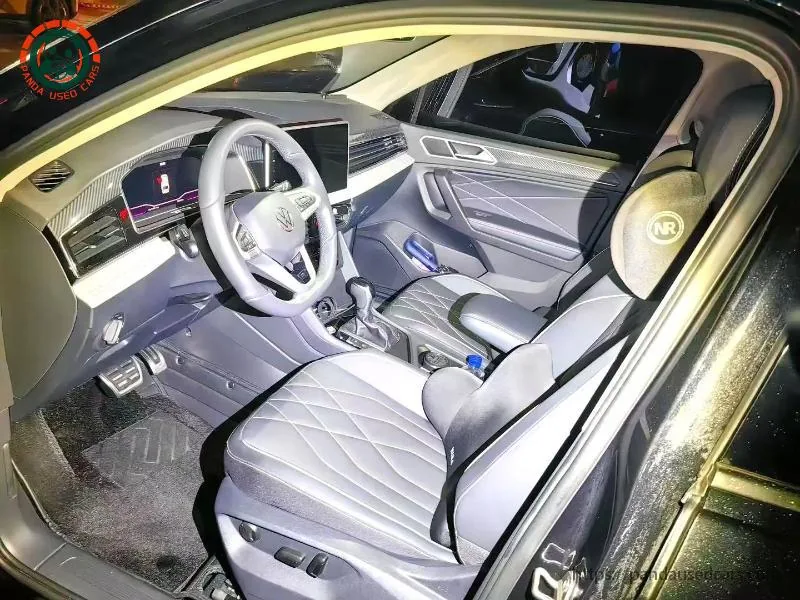
Body condition must be established on the exact wheelbase and generation because repair points, sensors and underbody layouts differ.
Decision boundary
Confirm VIN identity, then map paint depth and inspect seams, welds, sealant, fasteners, glass dates, pillars, aprons, rails, floor, spare-wheel area and suspension mounts. Separate cosmetic panel work from damage affecting load paths or restraints.
Evidence register
Collect a continuous walk-around, lift images, alignment readings, diagnostic scan and repair records. Inspect low cabin areas, connectors, seat mounts and restraint modules for water or dismantling evidence. Review front radar, camera and parking-sensor areas when repair is present. Carry the findings into the complete used Tiguan inspection and reconcile them with the history and mileage timeline.
Where the risk sits
Fresh paint, undercoat or a cleaned cabin can conceal damage. A warning-free dashboard does not prove restraint integrity. Structural uncertainty, flood evidence or undocumented safety-system repair cannot be converted safely into a simple discount.
Candidate scenario
One repainted door with consistent geometry may be acceptable after documentation. Uneven apertures, disturbed seat mounts, corrosion in connectors and restraint faults require deeper assessment. Reject the VIN when the repair boundary cannot be established.
Version-specific control
Condition must be observed on one vehicle. Preserve cold and hot results, module scans, dated media and service evidence. Classify each finding by consequence and evidence rather than by cosmetic impression.
Export and ownership consequence
A discount can compensate for an understood repair; it cannot prove legal identity, structural safety or destination eligibility. Record who must confirm each open field, what document or test closes it, and when that evidence expires.
Buyer hold points
Mark vin and labels, paint and seams, structure and underside before commercial acceptance. Keep flood indicators, restraint diagnostics, alignment and records visible until the responsible reviewer closes them. A changed VIN, beneficiary, delivery point or accepted exception reopens the affected gate.
Arrival handover
Freeze odometer, warnings, keys, accessories, body condition and unresolved actions before loading. Compare arrival condition with the loading file before cleaning or repair, and preserve the record for claims and workshop handover.
Turn uncertainty into a named action
Avoid conclusions such as “looks fine” or “probably standard.” An open question about vin and labels, paint and seams, structure and underside should request a precise VIN photograph, legal record, diagnostic result, measurement, road-test observation or destination ruling. Assign an owner and deadline. Do not release payment while missing evidence can change safety, legality or a high-cost repair.
Prepare the receiving workshop
The destination handover should identify the generation, legal model, powertrain, keys, service evidence, diagnostic baseline and accepted condition. Include decisions about flood indicators, restraint diagnostics, alignment and records. This reduces wrong-part orders and helps distinguish shipping damage from a pre-existing issue.
Audit the file before approval
Preserve the inspection sequence, ambient conditions and instrument evidence so the result can be reviewed later. A warm engine cannot stand in for a requested cold start, and a clean dashboard cannot replace a full-module scan. Link paint readings, underside images, service documents and road-test observations to the VIN. Separate confirmed defects from symptoms requiring diagnosis, then state whether each item means accept, repair, investigate or reject.
Read the record as if the original salesperson were unavailable. The conclusion about vin and labels, paint and seams, structure and underside, flood indicators, restraint diagnostics, alignment and records should remain traceable to dated evidence. Resolve contradictions rather than selecting the most convenient source, and preserve every market, year, test-condition or quotation-period limit beside the claim. Record the reviewer, review date, unresolved questions and next expiry point so another person knows what must be refreshed before approval.
Record the decision, not just the data
Finish with pass, hold or reject. A hold names the missing evidence, owner and deadline. Approval means the remaining limits are understood; it does not turn an unknown into a confirmed feature.
Keep a dated source beside every material conclusion. If the seller changes the vehicle, repeat the affected checks instead of carrying approval to another VIN or model year.
Check a Used Volkswagen Tiguan for Accident, Flood and Structural Repair: buyer checklist
- VIN and labels
- Paint and seams
- Structure and underside
- Flood indicators
- Restraint diagnostics
- Alignment and records
Official Volkswagen references
Use market material for context; contract from the actual VIN and legal record.
Volkswagen: third-generation Tiguan overview ↗Volkswagen: current Tiguan drivetrains ↗Buyer questions
Does repainting prove a major crash?
No. Determine the repair extent and quality.
Can a clean cabin exclude flooding?
No. Inspect cavities, wiring, modules and records.
Is alignment enough to prove structure?
No. It is one part of a competent structural review.